Built Environment & Transportation Systems Cluster

The cluster refers to all the human-made surroundings where people live, work, and play, encompassing buildings, infrastructure, and public spaces (rural and urban). It involves the planning, design, construction, and management of these spaces and their relationship to human activities over time. Modern built environments are increasingly shaped by technological advancements and a focus on sustainability, accessibility, and well-being.

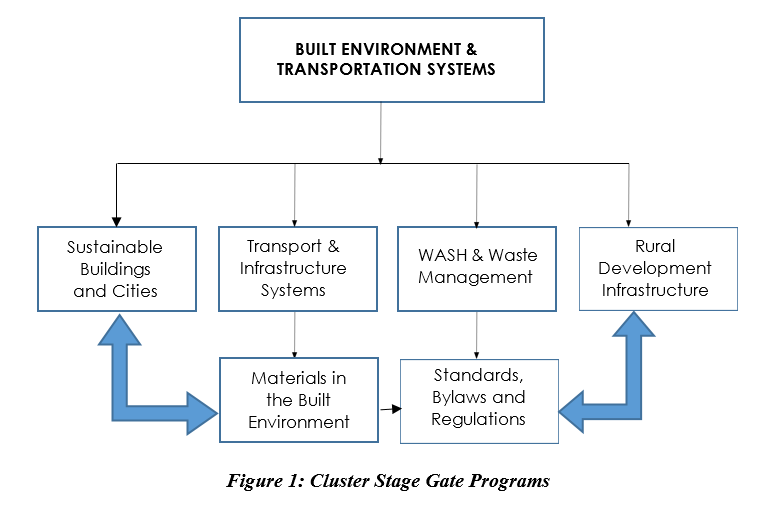
Figure 1 shows the programs under the cluster. Materials in the built environment and standards and by-laws and regulations are integrated in all the programs under the cluster.

Sustainable Buildings and Cities

Sustainable buildings and cities have an environmental impact and promote social and economic well-being for current and future generations. This is achieved through eco-friendly practices, efficient resource management, and a focus on public health and quality of life.

The Cluster offers the following research and development and consultancy services:

SMART Master Planning

  • Urban planning and development. Conducting research and consultancy on urban planning, transportation systems, and infrastructure development.
  • Sustainable building design and construction. Research and Development on innovative and sustainable building materials, designs, and construction methods.
  • Rammed Earth Construction. Design and construction of houses, schools and offices.
  • Energy efficiency and renewable energy: Investigating ways to improve energy efficiency in buildings and promoting the use of renewable energy sources.

Asset Resilience & Life Cycle Management

  • Building Pathology. Conducting building audits and assessments for existing buildings.
  • Sustainable Facilities Management. Consultancy in the operational management and maintenance of buildings and their infrastructure.

Building Information Modelling

  • Digital Twining. The creation and use of a connected, data-mirrored virtual copy of buildings and infrastructure to understand, analyze, and optimize their real-world performance.
  • 3D Designs. Architectural and structural models for building and infrastructure.
  • Model Making. The art and science of creating a physical or virtual, three-dimensional representation of an object, system, or space.

Geotechnical Soil Tests

This involves determining the physical, mechanical, and chemical properties of soil and rock formations at a project site.

Transportation Systems

Modern transportation systems are evolving rapidly, leveraging new technologies to enhance efficiency, safety, and sustainability. SIRDC is involved in research into smart transport infrastructure (roads, bridges, culverts, robots, etc..), transforming logistics and personal mobility. This is aimed at reducing traffic congestion, improve road safety, and minimize environmental impact through the integration of innovative technologies.

The Cluster focuses on the following areas:

  1. Transportation infrastructure development. Research and development to offer innovative solutions for transportation infrastructure and public transportation systems.
  2. Transportation systems optimization. Analyzing and optimizing transportation systems to improve efficiency, safety, and sustainability.
  3. Geotechnical Soil Tests. This involves determining the physical, mechanical, and chemical properties of soil and rock formations at a project site.
  4. Modern Road Network System Design. Research and Development in modern pavement materials and systems, such as pervious pavements, modified bitumen, prefabricated bridges and roads

Rural Development Infrastructure

Modern rural development focuses on improving the social, economic, and environmental well-being of people living in rural areas, often through a combination of infrastructure development, economic diversification, and sustainable resource management. This includes improving access to basic services such as education, healthcare, electricity, sanitation, and transportation (including feeder roads).

SIRDC is involved in the design and construction of rural infrastructure in the following areas:

  • Sustainable Building Designs and Materials. Develop and promote sustainable building materials and designs that can withstand natural disasters and climate change, reducing the need for frequent repairs and replacements. This includes modern green houses, animal quarters, chalets, gazebos, shops, agro-based projects, lodges, houses and offices
  • Rural Road Infrastructure. Improve rural road networks to enhance access to markets, healthcare, and education, thereby boosting economic growth and social well-being.
  • Renewable Energy Systems. Implement renewable energy systems, such as solar and biogas, to provide reliable and clean energy to rural communities, reducing reliance on expensive and polluting diesel generators.
  • Water and Sanitation Systems. Develop sustainable water and sanitation systems, including rainwater harvesting, greywater recycling and waste management, to improve rural livelihoods and reduce water-borne diseases.
  • Sustainable Transportation Systems. Promote sustainable transportation systems to reduce dependence on fossil fuels and minimize environmental impact.
  • Integrated Rural Planning. Foster integrated rural planning that balances economic, social, and environmental needs, ensuring that rural development is aligned with national goals and priorities.
  • Integrated Water Management. Implement integrated water management systems that ensure equitable access to water resources for rural communities.
  • Rural School Development. Support rural school development programs that provide safe, modern, and well-equipped learning facilities, enhancing access to quality education.

WASH and Waste Management

Modern waste management uses a comprehensive approach that utilizes advanced technologies and infrastructure to minimize environmental impact and promote a circular economy.

The cluster focuses on the following areas:

  • Sustainable Waste Management Practices. Develop and promote sustainable waste management practices, including reduce, reuse, recycle (3Rs) strategies, to minimize waste generation and promote resource recovery.
  • Waste-to-Wealth Initiatives. Explore waste-to-wealth initiatives, such as converting waste to energy, biofuels, or other valuable products, to create economic opportunities and reduce waste disposal costs. Design and construction of fixed dome biogas digesters and research into PVC-based portable biogas digesters.
  • Greywater Treatment and Reuse. Develop innovative greywater treatment and reuse systems, enabling the safe reuse of treated greywater for non-potable purposes, such as irrigation or industrial processes.
  • Solid Waste Management Infrastructure. Design and implement efficient solid waste management infrastructure, including waste collection, transportation, and disposal systems, to ensure proper waste handling and minimize environmental impacts.
  • Circular Economy Approaches. Promote circular economy approaches that encourage the reuse and recycling of materials, reducing waste generation and promoting sustainable consumption patterns.
  • Community-Based Waste Management. Implement community-based waste management initiatives that engage local communities in waste management activities, promoting behavioral change and community ownership.
  • Rain Water Harvesting. Develop innovative rain water harvesting systems for housing, industrial rural and urban development.

Training Services

Modern training in the built environment encompasses a wide range of topics focused on sustainability, technological advancements, and evolving industry practices. These training courses equip professionals with the skills to address contemporary challenges and contribute to a more efficient, resilient, and responsible built environment and transportation systems.

  • Basic Construction Skills (Carpentry, Building and construction, Paving, Painting, Tiling)
  • Sustainable Practices in Facilities Management
  • Biogas Digester Construction and Maintenance.
  • Rammed Earth Construction.
  • Working at Heights and in Confined Spaces.
  • Concrete Technology
  • Project Management in Construction
  • Irrigation Systems Design and Maintenance.