Established in February 1993 by the Government of Zimbabwe through the Research Act [Chapter 10:22] to carry out strategic Research & Development for the benefit of the manufacturing, service, agricultural as well as to commercialise the Research & Development outputs.
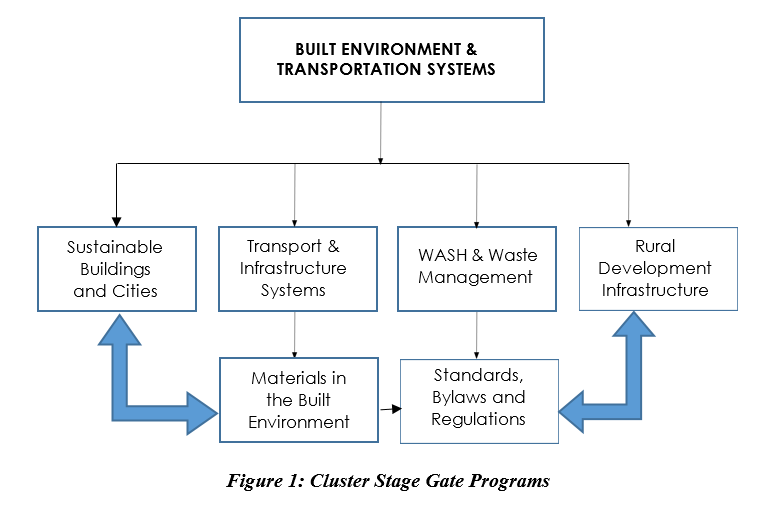
Sustainable buildings and cities have an environmental impact and promote social and economic well-being for current and future generations. This is achieved through eco-friendly practices, efficient resource management, and a focus on public health and quality of life.
The Cluster offers the following research and development and consultancy services:
SMART Master Planning
Asset Resilience & Life Cycle Management
Building Information Modelling
Geotechnical Soil Tests
This involves determining the physical, mechanical, and chemical properties of soil and rock formations at a project site.
Modern transportation systems are evolving rapidly, leveraging new technologies to enhance efficiency, safety, and sustainability. SIRDC is involved in research into smart transport infrastructure (roads, bridges, culverts, robots, etc..), transforming logistics and personal mobility. This is aimed at reducing traffic congestion, improve road safety, and minimize environmental impact through the integration of innovative technologies.
The Cluster focuses on the following areas:
Modern rural development focuses on improving the social, economic, and environmental well-being of people living in rural areas, often through a combination of infrastructure development, economic diversification, and sustainable resource management. This includes improving access to basic services such as education, healthcare, electricity, sanitation, and transportation (including feeder roads).
SIRDC is involved in the design and construction of rural infrastructure in the following areas:
Modern waste management uses a comprehensive approach that utilizes advanced technologies and infrastructure to minimize environmental impact and promote a circular economy.
The cluster focuses on the following areas:
Modern training in the built environment encompasses a wide range of topics focused on sustainability, technological advancements, and evolving industry practices. These training courses equip professionals with the skills to address contemporary challenges and contribute to a more efficient, resilient, and responsible built environment and transportation systems.